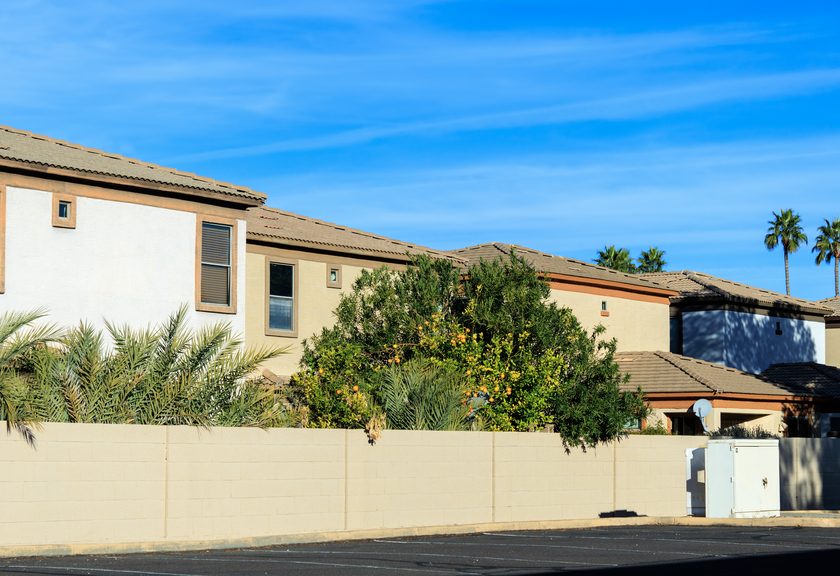
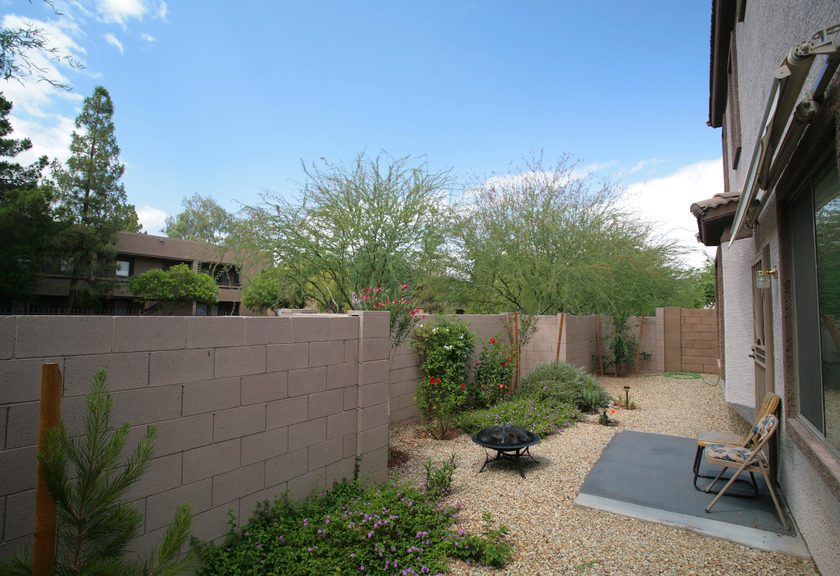
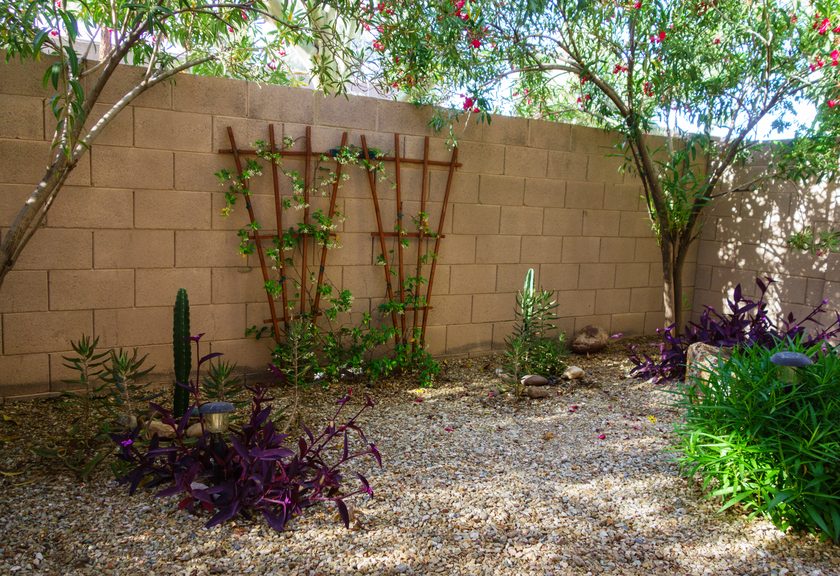
In almost any Phoenix subdivision, each backyard is enclosed by concrete block. Those walls stand through years of sun, monsoon wind and yard water, and sooner or later one cracks, tilts or drops a cap. Phoenix Block Wall Repair Co. handles block wall repair for homeowners across Phoenix, from one loose cap to a long run that a storm pushed over.
Most of these walls are built from concrete masonry units, the hollow blocks many people still call cinder block. Plenty of them sit right on a property line, so the wall that worries you may be half owned by the house next door.
Call or send the form, we come out and look at the wall with you, and you get a free quote. What happens next is your decision.
Not sure whether a crack matters? That is one of the most common reasons people get in touch, and the visit is free.
Each service has a page of its own: cinder block wall repair, leaning and fallen walls, new block walls and retaining walls.
Call 602-848-8239 or send the form, and a time can be arranged to see your wall.
Free quote. No obligation.
Almost every wall call fits one of these four. If yours sits between two of them, that is fine; the visit sorts it out.


Block walls rarely fail without warning. Walk the length of yours once a year, ideally after the monsoon, and watch for these:
One of these on its own is a reason to get an opinion, not proof the wall is failing.
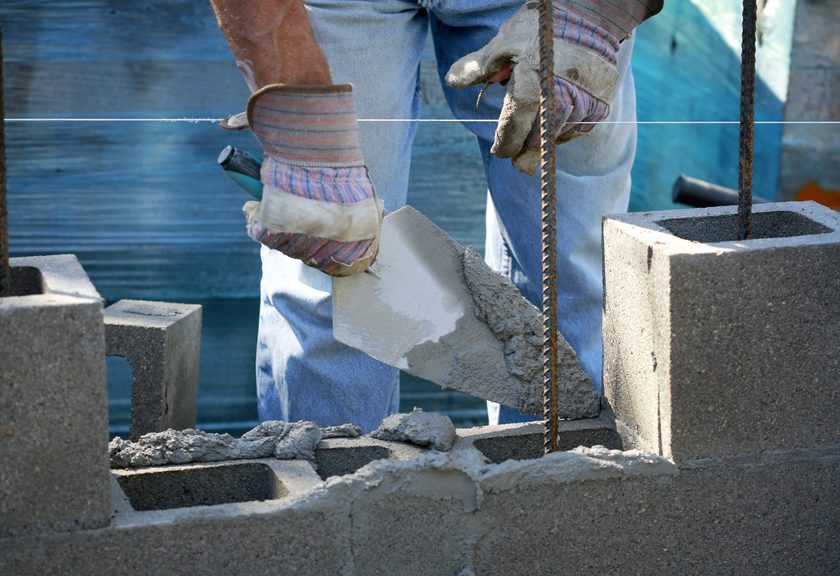
Concrete block wall repair covers most of what goes wrong with an older wall. Cracked mortar is raked out and repointed. Broken block is cut out and replaced, and the cells around it are refilled where the wall calls for it. Missing or loose caps are reset on fresh mortar.
The cause matters as much as the crack. Roots pressing on the footing, a car that clipped the corner, ground that rarely dries out, or plain age each point to a different fix, and a crack patched without its cause tends to open again.
Concrete block wall repair is often smaller than people fear. The cinder block wall repair page walks through the common fixes and what each one involves.
If a wall is down or leaning hard right now, the leaning wall page lists what to do first.
Summer storms bring sudden downdrafts, called microbursts, that can push hard against a long, straight wall with nothing bracing it. Those gusts are the usual trigger when a run goes over during the monsoon.
Wind is rarely the only cause. A wall usually goes over where the ground underneath had already shifted, where roots had lifted the footing, or where extra courses were added and the taller wall now catches more wind than its footing was sized to resist.
Whether a leaning run can be straightened or has to come down depends on the footing and the steel inside. That decision is made at the wall, after the base and the cracks along it have been looked at.
Not every call is about damage. People add a wall along a side yard, extend one to close off a new section of the lot, raise an older wall for privacy, or cut an opening for an RV gate or a pedestrian gate.
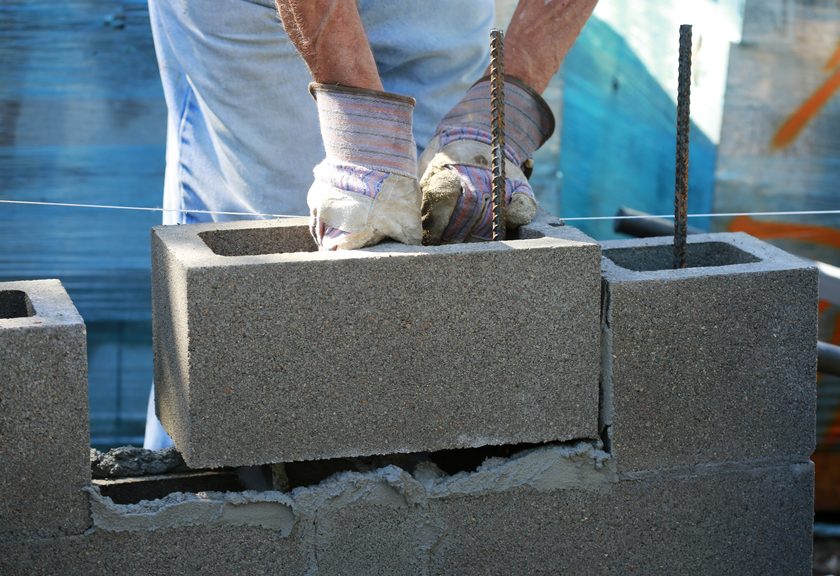
A new wall is generally laid on a poured concrete footing, block by block, with steel bars and grout in some of the cells and a cap on top. Raising a wall or opening it up means checking what is already there first, because the existing footing and steel decide what the wall can take.
Before a new or taller wall goes in, ask the City of Phoenix and, where there is one, your HOA what applies to your lot. The new block wall page goes into the details of layout, finish and gates.
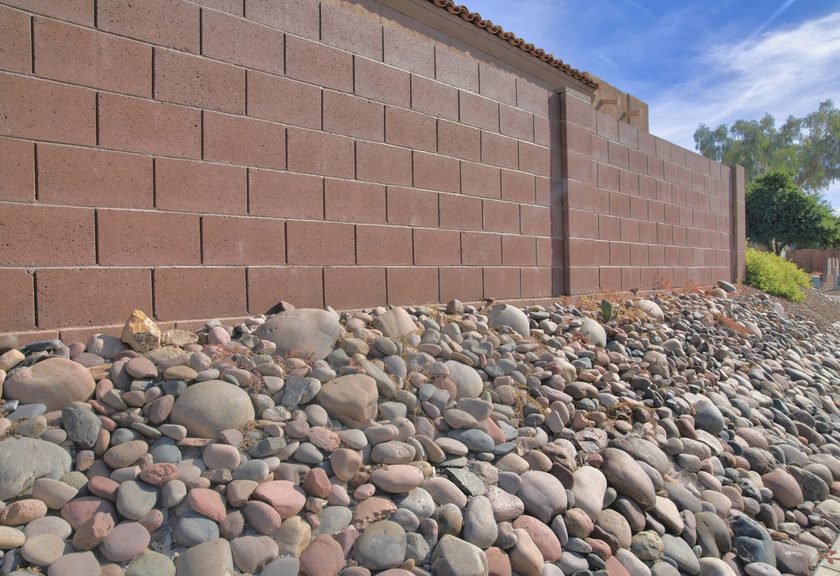
Most of the city is flat, but not all of it. Lots near the mountain preserves, such as the foothill streets beside South Mountain Park, can step up or down, and some flat yards are terraced to make room for a pool or a raised bed. Any wall holding back soil is a retaining wall, even if it looks like a garden wall.
Retaining walls fail differently from screen walls. Water building up behind them is the usual culprit, and the warning signs are a bulge, a forward tilt, or damp soil and white crust at the face. Blocked weep holes are worth checking first.
There is more on drainage, repair options and when an engineer gets involved on the retaining wall page.
Many Phoenix block walls sit on the line between two lots, and many others back up to a common area an HOA looks after. Before any repair, it helps to know who owns which part. A survey, the plat or your HOA documents can help answer that.
Talk to the neighbor early. Work on a shared wall often means getting into their yard, moving their plants or furniture, and agreeing on the finish their side ends up with. A quote that covers the whole section, both faces included, makes that conversation easier.
Many HOAs keep a list of approved colors and an approval process for changes to walls. Ask the association before work starts, even for a repair, so the finish on the street side is one they will accept.
The most common worry after a repair is a patch that stands out. Block is sold in a range of widths, colors and faces: smooth, split-face, scored and slumped. An older wall has also faded and picked up dust for decades, so even the right block looks new beside it.
Matching is done by eye at the wall. Sometimes the original block is still made and the match is close; sometimes the nearest option is chosen and the whole face is painted or stuccoed so new and old blend as closely as the block allows. Caps are handled the same way.
If your wall is stuccoed, the repair is usually finished with a stucco coat textured to suit what is there, then painted. Bring up the finish you want at the visit so it is part of the quote.


Describe what you see: a crack, a lean, a fallen run or a new wall you want. Mention whether the wall is shared, whether it has stucco or paint, and whether there is a pool or a gate nearby.
We come out and look at the wall, the soil at its base and the water sources near it, and then give you a free quote.
Damaged block is removed, the wall is rebuilt or repaired, and new mortar and grout are left to cure before any paint goes on. Look over the finished section and raise anything you would like changed.
No one can price a wall they have not seen. The look and the quote are free, and these are the things that move the number:
| Factor | Why it matters |
|---|---|
| Length and height | More block, more mortar and more cutting out of damaged courses |
| Cause of the damage | Water, roots or a footing problem may need fixing before the block does |
| Repair or rebuild | Repointing and cap work differ from taking a section down to the footing |
| Finish | Bare block, paint, or stucco and paint on one face or both |
| Access | A tight side yard, a pool or landscaping in the way changes how materials come in |
| Block match | Some colors and faces are easy to source; others take more searching |
Several problems on the same wall, or on two walls in one yard, usually make sense to price in one visit.
For a real figure, call 602-848-8239 and we will set up a time to come and look.
Caliche is common in southern Arizona soils. It is a layer where soil particles are cemented together by calcium carbonate, and according to the University of Arizona Cooperative Extension, it ranges from loose to almost rock-hard, and a tight layer can stop water from draining, so water pools above it.
Some Phoenix-area soils also contain clays that swell when wet and shrink as they dry. The Arizona Geological Survey lists cracked walls and slabs among the usual results. Which soil sits under your wall varies from street to street, so it is something to look at, not assume.
Water is the other half. Some older Valley neighborhoods still take flood irrigation from SRP, and newer yards run sprinklers and drip lines close to the wall. Either one can soften the ground at a footing if it keeps hitting the same spot.
Inside the city, that includes areas such as Arcadia in Camelback East, Encanto, Maryvale, Laveen, Ahwatukee, North Mountain, Deer Valley, the Paradise Valley village area and Desert Ridge. Outside it, we cover Glendale, Peoria, Scottsdale, Tempe and the Town of Paradise Valley.
Older neighborhoods like Maryvale, where homes went up in the 1950s, often have walls showing their age in the mortar and the caps. Arcadia, first developed for citrus groves at the south foot of Camelback Mountain, is known for mature, well-watered landscaping, and roots and water near a wall are worth watching there. Newer master-planned areas have long HOA walls along the streets.
Not sure whether your address is covered? Ask when you call 602-848-8239.
That is for the two households to settle, and it often turns on what caused the damage. Talk it over with the people next door before anyone is hired, and ask your HOA whether it has a say in the work or the finish. We can come out, look at the wall with both of you there, and give one free quote for the shared section.
Most cracked walls are repaired, not replaced. Hairline cracks in mortar, a few broken blocks and loose caps are local fixes. Replacement comes into the picture when a long stretch is leaning, the footing has moved, or the wall has been patched so often that little original work is left.
The goal is always a repair that blends in. Block comes in many sizes, textures and colors, and an older wall has faded, so the closest match is chosen by eye at the wall. Paint or stucco over the finished area usually does the rest. Ask at the visit how close a match is likely to be on your wall.
That depends on the job. Ask the City of Phoenix Planning and Development Department before a new wall, a taller wall or a retaining wall goes in, and ask your HOA as well if you have one. A like-for-like repair is still worth a question to both.
We work throughout Phoenix and in nearby communities, including Glendale, Peoria, Scottsdale, Tempe and the Town of Paradise Valley. If you are farther out, call 602-848-8239 and ask about your street.